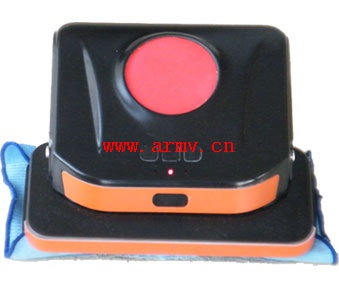
The key to dragging robots is an efficient, full-cover algorithm that stabilizes if the wheel's route is precisely known. For example, when the wheel slides, because...
The most important thing for drag-land robots is an efficient full-cover algorithm, which stabilizes only if the wheel's route is precisely known. For example, when the wheel slides, because the machine itself cannot know that there was a slide, the algorithm operates in a way that changed the previous parameter, and ultimately leads to errors. Leaving the wheel slide aside, most time-trawling also requires a straight-line approach. So the two wheels need to have speed PID control, and try to keep the two wheels as far as possible at roughly the same distance. Of course, after a distance, this does not ensure that there is no deviation, that the actual test results have proved to be uncertain, and that therefore an internal gyroscope is needed.
Mada uses 250 RPM direct-flow speed-reducing motors with 26 holes behind the motor, as shown in figure 6-6, which are detected by the PV sensor. The maximum speed is set at 4 rotations per second for motor-reducing output, with a rate of 26:1 per second for motor-reducing parameters, so the actual motor-reverse rate is 4*26 = 104 turns/s, and the pulse of speed-exposed discs is 104*26 = 2704 pulses/s.
Speed pulse N = 676*n of which n is the rate of rotation per second of the reduced motor output axis.
Quick four turns per second, medium two, slow one.
The conversion to pulses is 1,352 out of 2704 (1s) and 676 (1s) slow.
In three, slowness widens or reduces the pwm pulse by five.
Medium speed increases the width of the pwm vein or reduces it by 10.
Rapid situation widens or reduces the pwm pulse by 12.
One lap to the motor's output axle, 26 turns to the speed drive, 676 pulses.
The outer perimeter of the wheel is 15 cm. As a result, 676 speed pulses correspond to 15 cm and thus 1 cm to 67 pulses.
With regard to the speed balance of the two wheels: as the motor characteristics of the two wheels are not entirely consistent, the same PWM ratio can lead to a slight difference in motor speed, and the accumulation of errors may result in the actual path of the tractor not being straight, but rather one-sided. For this, the motor speed of both sides needs to be coordinated to make the motors the same speed.