
One of the new chips in this year's iPhone is U1; it provides a hyperbroadband connection, combined with IOT technology, which can provide numerous new services to businesses and consumers. As Apple says, UWB technology provides "space perception" -- so that your mobile phone can identify the surrounding environment and the objects in it.

One of the new chips in this year ' s collection of iPhone is U1; it provides a hyperbroadband (UWB) connection, combined with IOT technology, which can provide numerous new services to businesses and consumers.
As Apple says, UWB technology provides "space perception" -- so that your mobile phone can identify the surrounding environment and the objects in it. In essence, an iPhone 11 user can point his or her mobile phone at another and transmit files or photographs.
Although this technology is not new, the apple operation marks the first time that UWB has been used for modern smartphones.
What is ultra-wideband?
UWB is a short-range wireless communication protocol that uses radio waves like Bluetooth or Wi-Fi. It is very different from Bluetooth or Wi-Fi, because it works very frequently. It uses a wide spectrum of GHz, as its name suggests. It says, like a radar, it can scan the entire room consecutively, and locates an object precisely like a laser beam, discovers its location and communicates data.
In the early 2000s, UWB received limited applications in military radars and clandestine communications and was briefly used as a form of medical imaging, such as a remote heart surveillance system. Its use was lagging behind until recently when commercial interests began to explore potential uses.
According to Phil Solis, Director General of IDC Research, today’s main use is expected to be location detection and equipment ranging. Although Wi-Fi and Bluetooth have been modified to better locate and connect to other equipment, UWB is born to be more accurate and less power-consuming, and its prices are expected to decrease as the production of UWB chips increases.
According to Solis, Samsung, Apple, and Wah are all involved in the UWB project for the world’s largest smartphone manufacturers, including chip and antenna production. However, apples are the first company to actually deploy them in a cell phone.
Samsung is also a member of the Fira Alliance, which is working to develop the UWB ecosystem. The ecosystem is based on the existing IEE 802.15.4/4x low-data-speed wireless communication standard.
How does UWB work?
The UWB launcher works by sending billions of pulses on wide spectrum frequencies (formerly known as "pulse radios"); then the corresponding receiver transforms pulses into data by listening to familiar pulse sequences sent by the launcher. Pulses are sent about every two nanoseconds, which helps the UWB achieve its real-time properties.
UWB has extremely low power, but high bandwidth (500 MHz) is the ideal option for relaying large amounts of data from mainframe equipment to other equipment about 30 feet away. Unlike Wi-Fi, however, it is not particularly good at wall-to-wall transmission.
'Cause it's so high, it's got a lot of eyes,' says Jack Gold, the chief analyst of J. Gold Associates." So, the advantage is that because it has such a wide bandwidth, it has a lot of data capability. If you want to transmit a 60GHz signal, it's 500 MHz in width... and multiply it by any channel you can make, you're talking about very wide bands."
In order to increase the scope of the UWB and the reliability of its reception, a MIMO (multi-input multiple output) distributed antenna system is added to the standard. Short-range networks can be achieved.
When a smart phone with UWB (e.g. the latest iPhone) approaches another UWB device, both begin to measure the distance, or to measure their exact distance. The range is measured by the "flight time" (toF) between the devices; these measurements are used to calculate the time of return of the challenge/response package.
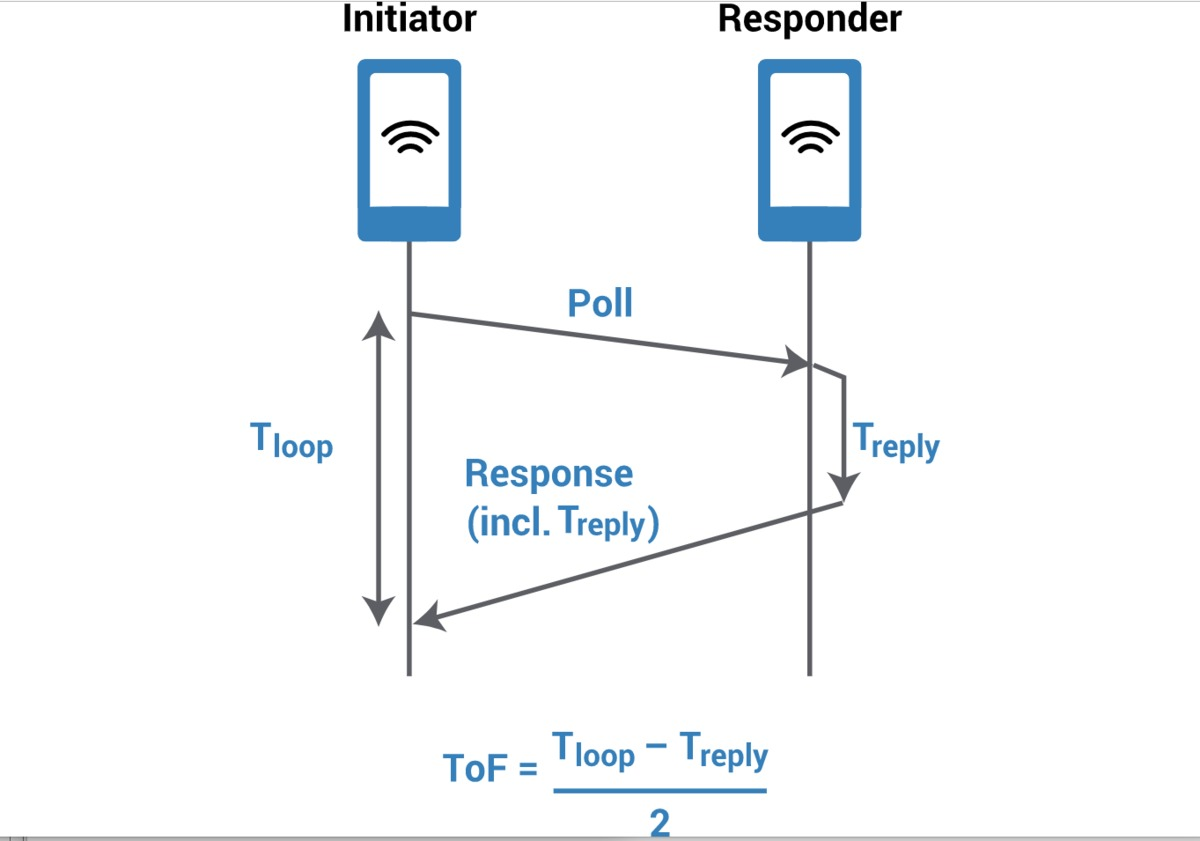
According to the Fira Coalition, based on the IEEE 802.15.4a standard, UWB can determine the relative position of the equivalent equipment by viewing it within 200 metres. The Union is currently adding a security extension, as stipulated in IEEE 802.15.4z, to make it a "safe process technique".
Depending on the type of use, such as asset tracking or equipment positioning, one of the UWB devices calculates the exact location of another UWB-supported object, such as the car keys or television remotes that fall between the couch pads. If the equipment is operated by an indoor navigation service, then the UWB-supported device must know its location in relation to the fixed UWB anchor and calculate its location on the regional map.
Solis states that with precise ranging, UWB has advantages in accuracy and safety over Bluetooth and WiFi, and that this advantage can be applied to many different applications. For example, UWB devices can be used to unlock cars like key buttons, or to access safe areas within buildings.
"It's essentially another security check," says Solis. Or, your cell phone becomes your debit card. And maybe apples have thought of NFC being used for [Apple] Pay, and UWB becomes another check."
UWB can also be another way of thwarting a follow-on or middleman’s attack, in which case the bad person monitors an area, such as a parking lot, trying to intercept and then store authentication information between two devices, such as a key button and a car. The UWB device signal ignores all other equipment in one area.
What are the possible uses of UWB?
Apple has patented the use of UWB and beacons (known as iBeacon), and the sensor that powers small batteries can be attached to objects and broadcast signals, and then the UWB equipment can be used to estimate the distance between the two objects as low as a few centimetres. Thus, for example, an airport or mall equipped with a beacon network can monitor pedestrian movements in buildings and provide real-time instructions on destination.
Apple refers only incidentally to UWB in the announcements of iPhone 11 and iOS 13.1 issued in September, and states that AirDrop will be made better by " directional perception recommendations " . Basically, UWB will allow equipment users to know who is around and to transmit files via AirDrop against them.
"That's exactly what they want to do," said Gold. They said, "Your friend is three degrees to your left, and Joan is right behind you. Don't send anything to Joan, just your friend."
In this regard, Gold stated that UWB could be a safer way of transmitting data at short distances between mobile phones because it knew the exact location of another UWB-supported device.
What would UWB do in iPhone 11?
The U1 chip developed by the apples allows three iPhone 11s to transmit data using the AirDrop file transfer service at a distance similar to that of Bluetooth.
Although AirDrop can operate with Bluetooth and Wi-Fi, the U1 chip developed by apples can be specific. In other words, the iPhone 11 user can point his mobile phone at another iPhone 11, and only it will appear in the file transfer rather than in a list of possible file receivers.
In the future, apples are expected to activate iPhone as a car key button.
According to the Fira Coalition, UWB would change the connectivity experience of the whole thing and the automobile industry, as indicated by Debra Spitler, Vice President of Business Development.
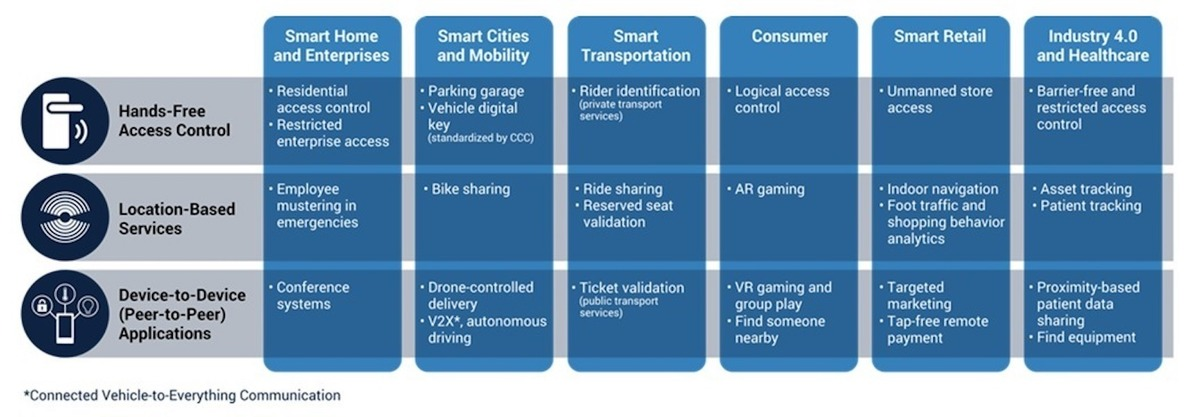
Fira is initially concerned with three main types of use. (1) off-limits; (2) location-based services; and (3) equipment for equipment (point-to-point). The use of these categories cuts across six areas of use, including smart homes and businesses, smart cities and mobility, smart transport, consumer use, smart retailing, and industrial 4.0 and health care.
UWB FiRa Apple
FiRa Consortium
"UWB was first introduced as a high-data-rate communication technology for multimedia data. To establish UWB as a new 'ranger technology', an entirely new ecosystem needs to be built. "Fira indicated via e-mail.
Where will UWB go?
Fira Coalition members are convinced that the success of the UWB ' s safe and precise ranging depends on an interoperable, integrated and interconnected ecosystem. This will need to be done.
Interoperability between multiple devices and the need for compliance and authentication procedures.
The Fira Alliance will focus on UWB examples using 6-9GHz spectrum.
The member companies we attract will bring with them a wide range of ecosystem knowledge, leadership in vertical areas of the target market, extensive technical and systemic expertise, and strong presence and experience in other UWB-related alliances.
Introduction of a new name, Fira, to help overcome the stereotyped image of UWB as an " old communications technology " , while emphasizing the transformation of UWB as a secure fine ranging and sensory technology.
Strong market promotion and education to inform people about the benefits of using UWB technologies.
"We have to see how well it actually works, how many people want it, how many services can really bind it." "Gold says." And do you really want to install a mini radar on your phone? I think that's why it might be blocking it."