
The first stone clock, based on the design and realization of embedded smart alarm systems, appeared in the 1920s and was replicated from the 1930s, and since the 1960s, thanks to the application of semiconductor technology, which successfully solved the problem of the manufacture of day-to-day quartz clocks, has been widely applied in the field of timing. Instead of mechanical clocks, more precise time standards have been developed...
Design and realization based on embedded smart alarm system
Summary
The first stone clock appeared in the 1920s and was replicated in the 1930s, and since the 1960s, thanks to the application of semiconductor technology, which successfully addressed the problem of producing the day-to-day stone clock, the stone-electronic technology has been widely applied in the field of timing. Instead of machine clocks, more precise time standards have been developed. As science advances, sophisticated electronic elements have emerged, the stone-to-earth clocks have also begun to become small and delicate, as they are real goods and decorations. It facilitates and adds new colours to people's lives. Designing is based on simple, practical and accurate walking in the current circumstances. And experiments have shown that the oscillations of the clocks are more precise and easier to walk when they use quartz crystals as a source of time-based signals. The clocks are a timer device that opens up new miles of time measurement. The clocks are familiar with them, they are a timer that gives us time, and we use them every day.
However, in order to observe time, it is possible to understand information that is closely related to other human beings, such as temperature, week, reporting time, music, etc., and the emergence of smart electronic alarm clocks, which can be automatically updated by connecting to wireless networks, which are easy to read, show intuitive, diverse functions, simple circuits, etc., and are consistent with the trend towards electronic instrumentation and have broad market prospects.
The display of the digital tube is controlled by a single machine, the modification of the set time with a user-friendly keyboard, the use of an passive beeper for the whole point-time system, the performance of the timing function by adjusting the weight of the input wave to achieve the sound of the beautiful melody, the system ' s more well-designed features showing the time date, the whole hour, the time date reconciliation settings, and, in addition, the introduction of some experiences and methods of the single player and the compiler so that the compiler of the single machine can be transposed to a single film with partial modifications Finally, some of the problems and difficulties encountered in making smart alarms based on single-piece machines have been summed up, the greatest feature of which is that read-only storage can be repeated, and that streamlining the version of the high-efficiency microcontroler STC89C51RC single machine provides a flexible and cost-effective option for many embedded control systems, which is also the reason for its wider application.
Table of Contents
1 Introduction 1
- 1 Research background 1
- 2 Research status 1
- 3 Research goals and content 1
- 4 Organizational arrangement of the paper 1
2 Summary of theoretical and technical aspects of the smart alarm system 2
- 1 Design principle 2
- 2 Hardware circuit design 2
3 Conclusion 6
Introduction
Research background
With the development of science and technology and the restructuring of the electronic technology industry, single-slash machines have begun to develop rapidly, and the market has become increasingly in demand for smart clock control systems as domestic appliances become more widely available. With their chips, they are highly integrated, processable, and reliable, and have been successfully applied in areas such as industrial automation, smart instrumentation, and household appliances.
Research Status
It is now a highly developed society in which the concept of time is important, where the control of time has been a difficult issue since ancient times, where events are said to be life, and where the multifunctionalization of the time clock of the LCD electronics is bound to take place step by step, and where time-related products are essential at all times, the prospects are as great as ever.
The timer function, which is the core control of a digital clock, can be performed through its clock signal, and its time data can be exported through a single machine and displayed using the monitor. The timing and timing function can be performed on the keyboard. The output device monitor can be shown using LCD and digital tube display techniques.
Research Objectives and Contents
In combination with the current situation, the embedded domain is a relatively broad one in which those who can take a place are the best in terms of code, functional research, and learning from abroad in innovative modules.
Unlike a general calculator system such as a personal computer, an embedded system usually carries out a predefined task with specific requirements. Since an embedded system is designed for a specific task, the designer is able to optimize it and reduce the cost of size.
The smart clock design described here refers mainly to control systems such as clock display, time setting, hour reporting, etc. This is based on the use of the STC89C51RC single machine as the core to achieve smart alarm control, so the selection of the STC89C51RC single machine instead of the other single machine is mainly due to the early market entry of the STC89C51RC single machine, the opening of the bus, the large amount of equipment for simulation development, the low price of the chip and its development equipment, its faster speed, and better electromagnetic compatibility. The greatest feature of the STC89C51RC single-piece comparison of performance with various aspects of the MCS-51 of the industrial standard is that read-only storage can be repeated, a streamlined version of the high-efficiency microcontroler, and STC89C51RC single-piece machines provide a flexible and affordable option for many embedded control systems.
A theoretical and technical overview of the intelligent alarm system
Design principle
The electronic clock consists of STC89C51RC, Crystal Vibration, Keys, six digital tubes, Beeps, etc., using external crystal- vibrating circuits as a single-formulator vibrating circuit, timed by a time extension and a cycle program, timed by a minute, 60 minutes by an hour and 24 hours by a control key. Press the time button and then press the add-and-decree feature key to achieve time additions and subtractions. The move key selects the option to adjust each time you press a value plus one. Press the alarm key to adjust the clock time.
Using the timer function of a single machine's internal counter, programming settings are mainly for the timer/meter working method repository TMOD. These are: working method bits, set to mode 2; counting/timer bits, set to work timer.
Hardware circuit design
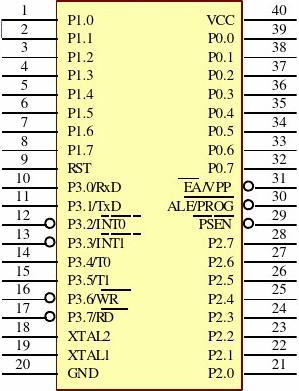
STC89C51RC is a low voltage, high performance CMOS8 microprocessor with a 8K scintillable program to erase read-only memory (FPETOM-FlashProgramamabalandErasableReadOnlyMemory), i.e. a single machine chip. A single effaceable read-only memory can be erased 1,000 times and internal FLASH wipes more than 100,000 times. Using high-density, non-removable storage manufacturing techniques, the chip is compatible with the industrial standard MCS-51 command set and output tube foot. The integration of the multifunctional 8-bit CPU and scintillation memory into a single chip has made STC89C51RC a very expensive microprocessor chip that has been applied in many circuit designs.
STC89C51RC Monophone feature: Work voltage: 5.5V-3.4V work frequency: 0-40MHz user application space: 8K tablets integrated into 128*8RAMISP (programmed in the system)/IAP (appliable programmable in the system) without the need for a dedicated programming/simulator through a serial entry (P3.0/P3. 1) Direct download of the user program EEPROM with a total of 3 16-bit timers/calculators, with a fixed time Zero being used as 2 8-bit timers for the external interruption of the 4-way common walker (UART) and multiple UART work temperature ranges using the timer software.
STC89C52R C
Digital tube drive circuit
Dynamic display drive: Digital tube dynamic displaying interfaces is one of the most widely used displays in a single machine. Dynamic drive is linked to the same end of the eight displays of all digital tubes "a,b,c,d,e,f,g,dp" and additional spaces for the public poles of each digital tube, which are controlled by separate I/O lines, all digital tubes receive the same font code when the single machine outputs the font code. The display of the font depends on the control of the single machine over the selection of the COM end circuit, so as long as we open the selection control of the digital tube that will need to be displayed, the position will show the font, and the unselected digital tube will not shine.
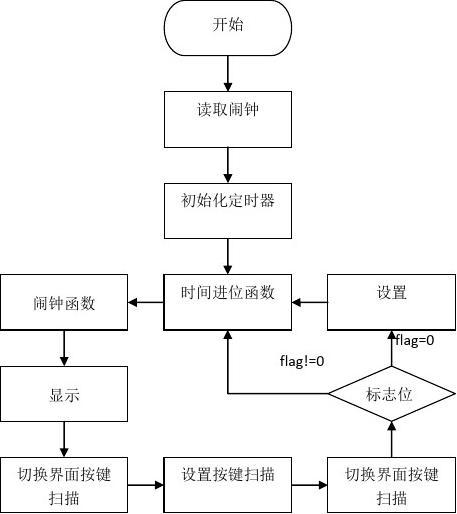
Flow chart
Conclusion
This design, which gives me a deep sense of the value of learning that it needs to be translated into practice, that is, that theory has to be linked to reality, has greatly improved my ability to access information, program development, hands-on design, and self-learning on some strange software.