
We are the world's largest ageing population and the largest population of dementia...
Java-based senior locator server software design
Introduction
My country, the country with the largest number of ageing people in the world and the largest number of persons with dementia, accounts for 11.2 per cent of those over 60 years of age, i.e. one out of nine persons suffering from the disease, and some of these other conditions also make it difficult to find older persons after they have lost their lives. With the acceleration of the ageing process in our country, the issue of the elderly has become a serious social problem.
Thus, the use of advanced positioning services to locate older persons is an important issue facing all those involved in society today. This paper has designed a Java-based positioning system server for older persons, which needs to be designed using current communication technologies, GPS positioning techniques and sensory techniques to achieve real-time guardianship of older persons and timely notification of family members.
Function overview
The main purpose of this paper is to design a positioning system, the ultimate goal of which is to locate older persons at any time in order to facilitate the identification of lost older persons. The locator requires user registration accounts, each of which binds a number of mobile phone numbers as an emergency contact for the system, so that it can send the contact information to the contact in a timely manner after reaching the required autumn and filters the information on garbage from unregistered telephone numbers; it can provide information on the current location of the equipment, transmits the location of the elderly to the server in real time through the GPS signal, and then sends it to the registered user in map and text after server processing.
Requirements analysis
The server first needs to include user registration, log-in, log-in of the movement path of the signal, search for historical information, and users can view the movement path and time of the elderly through server records; then, in order to prevent excessive storage pressure, it needs to be deleted, operated by the user himself, to ensure the effectiveness of real-time guardianship; (b) The ability to signal in real time, where users can limit the range of activities of older persons and, once older persons are out of this range, the server receiving the signal can immediately notify the user, upon verification; telephonic capacity allows older persons to have a means of seeking help when needed, and the users are bound by registered users; The alarm capability is the primary means of informing users that the location of older persons is analysed through the handling and recording of signals, that timely warnings are given to users beyond a certain range or within a certain period of time, that the missing or ill-health of older persons can be detected in a timely manner and that assistance is provided in a timely manner; Finally, some of the operational capabilities required by the system can be temporarily shut down if accompanied by users, or if there is a need and a user ' s approval. After all, the limited provision is for basic day-to-day flight activities for the elderly, and the inability to close services when there is a need to go outside can be a problem for users.
Structural diagram of the server system.
Outline design
After the completion of the needs analysis phase, user input is obtained through a large number of visits and questionnaires, and corresponding adjustments to the system are made to the actual situation, mainly to address the module design of the process to meet the system's needs. These include the division of the system into several modules, the determination of interfaces between modules, the transmission of information between modules, and the design of the data structure, the module structure, etc.
The software designed here consists of three main components: GPS positioning module, mobile phone client and back-office server module.
program flow chart
Give the following instructions module by module:
GPS positioning module:
Since older people often lose their way home without knowing where they are going, when users search for specific locations for older people, send a query text message, the system automatically gives feedback on maps showing the location of older people, mobile phone clients with equipment can search for location information on smartphones, and the older people ' s mobile route records.
Mobile phone clients: Clients need to be able to receive and process the signals transmitted by the server in a timely manner, to present accurate and clear maps and to notify the user when an older person has called a warning request, as well as to provide immediate information on the movement of the older person and his current location.
Back-office server module: The server requires accurate information on the location of older persons based on GPS feedback and records the movement path of older persons, the system being operated mainly under Windows and equipped with Java environments.
In short, the three interact in a loop, where the location module sends data to the server in the form of a data frame via a 2G network in the form of a table below. The "blank identification" is used to distinguish between different devices. The server obtains a data value by deciphering the command and stores it in a database by different device. When a mobile phone is sent a request to it by the end of the cell phone, the server delivers the data to the mobile phone upon request.
Data frame format
frame
control
Longitude
Latitude
Transportation
step
step
Transportation
school
head
system
Spend
Spend
move
number
Frequency
move
Verification
mark
Character
value
value
Distance
hour
and
Knowledge
Distance
Time
The configuration of the interface is divided into software, hardware, user interface and internal composition:
The software interface component uses the MySQL interface provided by Java for all access to the database. The server can use MySQL back-up commands for the database to preserve the data.
Hardware interface component, with Java labeled input/output for basic I/O operations and document reading and writing operations.
Internal interface component, using the Java object-oriented concept between modules, achieving class creation, inheritance, etc.
User interfaces need to be simple, not too cumbersome, using Java configuration in design language, and highlighted in the alarm and map sections.
Overall overview
1) Alarm function:
After a certain distance from the designated location, it is determined by the time of receipt of the signal that, once the threshold has been exceeded, the server alerts the terminal in the hands of the family to indicate that the elderly have left a distance, a function that can be opened and closed manually through the terminal to avoid unnecessary inconvenience when the family accompanys them.
The distance between the transmission rate V from the wave, time T availability, L=V*T
When L>S (specified value), the system alerts.
When L<=S, the system operates normally.
Positioning function:
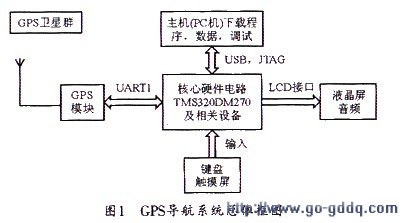
The distance between an older person’s location is calculated by the rate of transmission of the wave and the time spent, and the location of the older person can be identified through the GPS system after the disappearance. The current positioning function has to be achieved through the GPS.
- Real-time positioning
Family members can locate the current location of the elderly at any time
The map gives the location of the elderly, the mouse moves to the location, and the system gives the location time and location description.
- Trajectory tracking
The system also gives the location time and location description letter.
- Timely alarm
Set a space to check the activities of the elderly.
- System Management
The provision of a well-developed system set-up management allows flexibility in the range of activities of older persons.
- Electronic Fence
In a state of defence, the alarm will be triggered by unexpected circumstances, such as the movement of older persons beyond the defined range or a fall.
System requirements analysis
For each programmer, the quality of the software that he designed depends not only on whether it works properly, but also on whether it meets the needs of the client. Therefore, the development of a locator software for the elderly was preceded by an analysis of the needs of the elderly and the identification of the basic needs of the elderly for the software system, based on a survey of existing locator systems.
- 2 Performance analysis
(1) Data accuracy: 1. When data are read from the database, data location is required to be accurate. 2. When data are entered into the database, data entered must be valid. 3. Data information returned from queries is derived from the database.
(2) Information security: Users, when operating and registering, want their information not to be leaked
(3) Characteristic requirements: Positioning response times are as fast as possible.
(4) There must be good scalability and compatibility to support multiple customer terminals.
6 Server module design instructions
Server core module design
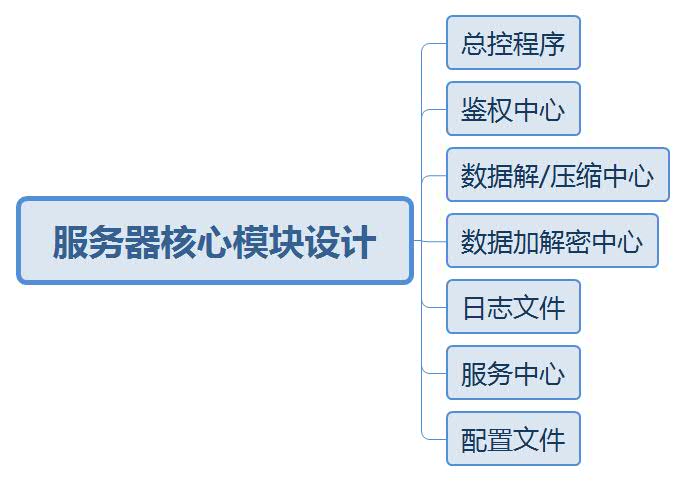
The core module consists of seven components: master control program, AC, data solver/compression centre, data encryption centre, log file, service centre and configuration file, all services are controlled and allocated by the core, and the confidentiality of the transmission of information is also ensured by the core. The master control program is the whole server-end main program, which is primarily responsible for the start-up (configuration reading, module loading) and closing of the system as a whole and logs the operation of the program; The Centre is responsible for initializing user information and filling out some of the basic information. Data decompression/compression centres, data encryption centres are also a measure to protect user information, which is encrypted and effectively prevented from leaking information, while log centres record and back-up user operations; service centres are primarily responsible for providing timely feedback assistance when users encounter operational difficulties and for the subsequent maintenance of equipment; The configuration of the request is mainly the recording and backup of information on the movement paths of older persons, requiring regular clean-up by users.
- 1 Project innovation points
The program is written in a purely Java language, and the program is therefore not platform-specific. It can operate on different platforms without the need to change the code, greatly enhancing the functionality of the program and allowing users to perform some simple redactions based on their needs without downloading specific operating software.
Conclusion
The seniors positioning system software, designed for this purpose in Java, combines the extensive map and precision positioning capabilities available in the GPS system, the location of the elderly at present, the routes that move over time, the balance of physical security and the lighting of alarms and night walks.
The software has been developed, but there will be many unconsidered issues in the future that need to be further refined.