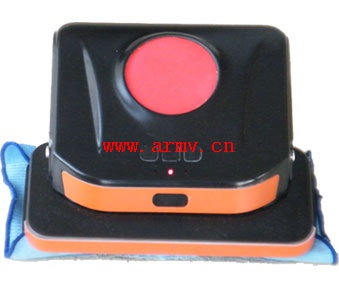
The choice of an indoor navigation program is closely related to the choice of a ground sweeper navigation program and the performance of the product. Different requirements can be used for different programs, leading to different designs, and ultimately...
The choice of ground sweeper navigation options is closely related to the performance of products. Different requirements can lead to different designs, ultimately involving the cost of products, the cost of research and development, the pricing of sales, and the competitiveness of markets.
In order to make the product work, efficient indoor cleaning needs to be achieved in a short period of time, reducing duplication, and allowing limited battery energy to clean as many room areas as possible. So the system can't be randomly calculated, with random algorithms that make the system very simple, with a single machine, two collision sensors, and randomly turning back once the barriers are encountered. But the problem is that there are many areas that have not been cleaned, and some areas that are being cleaned over and over again.
The most important thing for drag-land robots is full-cover sweep algorithms, the technique of which is the normal operation of software in the lower layers and the stability of hardware. For example, normal algorithms do not allow wheel-sliding, so wheel-sliding does not make algorithms normal. In practice, wheels cannot be used without slippage, so these algorithms are only research under ideal conditions. Using the miint5200 sample, assuming that two wheels are 45 mm in diameter, with a slide of 25 px, the direction is more than 20 degrees. In normal operation, motor gears and wheel sizes vary, leading to a build-up of errors, and ultimately to a different length of route to or from the two wheels, i.e., the trawler cannot guarantee a straight line. Therefore, it is important to use external correction techniques to ensure that at least partial straight lines are carried out, and that only straight lines are assured that the overlay algorithms work properly. The coverage of algorithms is, of course, complex, and, in addition to a straight line, handles the sidewalk. Foreign research shows a three-fold gap between the price of domestic cleaning robots with and without navigation.
It is not practical to use the method of entering geometric maps of rooms, because benches, etc., can move at any time. If multiple external noise transmitters are used, the location of the noise receivers in the toddlers, the problem is that multiple external transmitters are not easily installed at home, and noise reflexes, etc., affect location. There are also a number of smart sweepers that use cameras to locate, but are highly disturbed by light and have a general accuracy of position. Infrared phase ranging techniques can also be used to locate, but experiments have found that the luminous disturbances are evident and therefore unstable. If PSD devices are used to locate, the location is good, but the two-dimensional PSD sensors cost thousands of dollars and are not suitable for use in home electricity. Using virtual walls or lighthouse technology, which is currently commonly used by ground sweeping robots, the range can only be judged in general terms and is not suitable for indoor navigation.